Physical Development and Sensory Processing
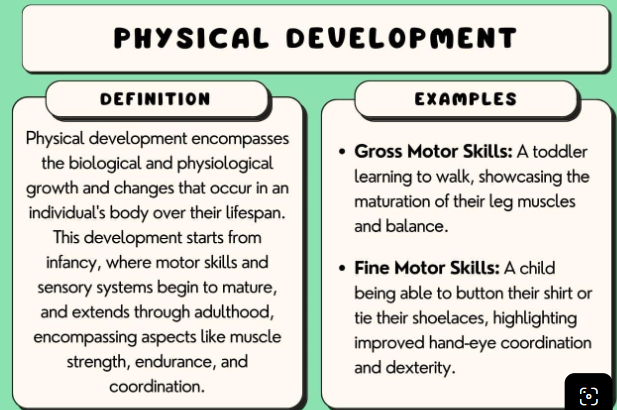
Physical development (PD) in children refers to the growth and maturation of both the body and brain, including the development of muscles, coordination, and motor skills, which form the foundation for daily activities, learning, and lifelong health.
Physical development includes gross motor, fine motor, sensory processing, co-ordination, brain-body connection and muscle development.
Research shows a consistent link between motor competence (the ability to control and coordinate the body) and executive functions like working memory, focus, and self‑control. These skills underpin school readiness and academic success. For children, developing these physical skills can indirectly improve concentration and problem‑solving abilities.
Physical skills such as balancing, grasping, or self‑care tasks (e.g. dressing, eating) help children become more independent. Progress in these areas can boost self‑esteem and motivation, which are especially important for children who may face additional challenges in learning and daily life.
Below are some activities to support development.